What's Actually in a Myers' Cocktail IV Bag?
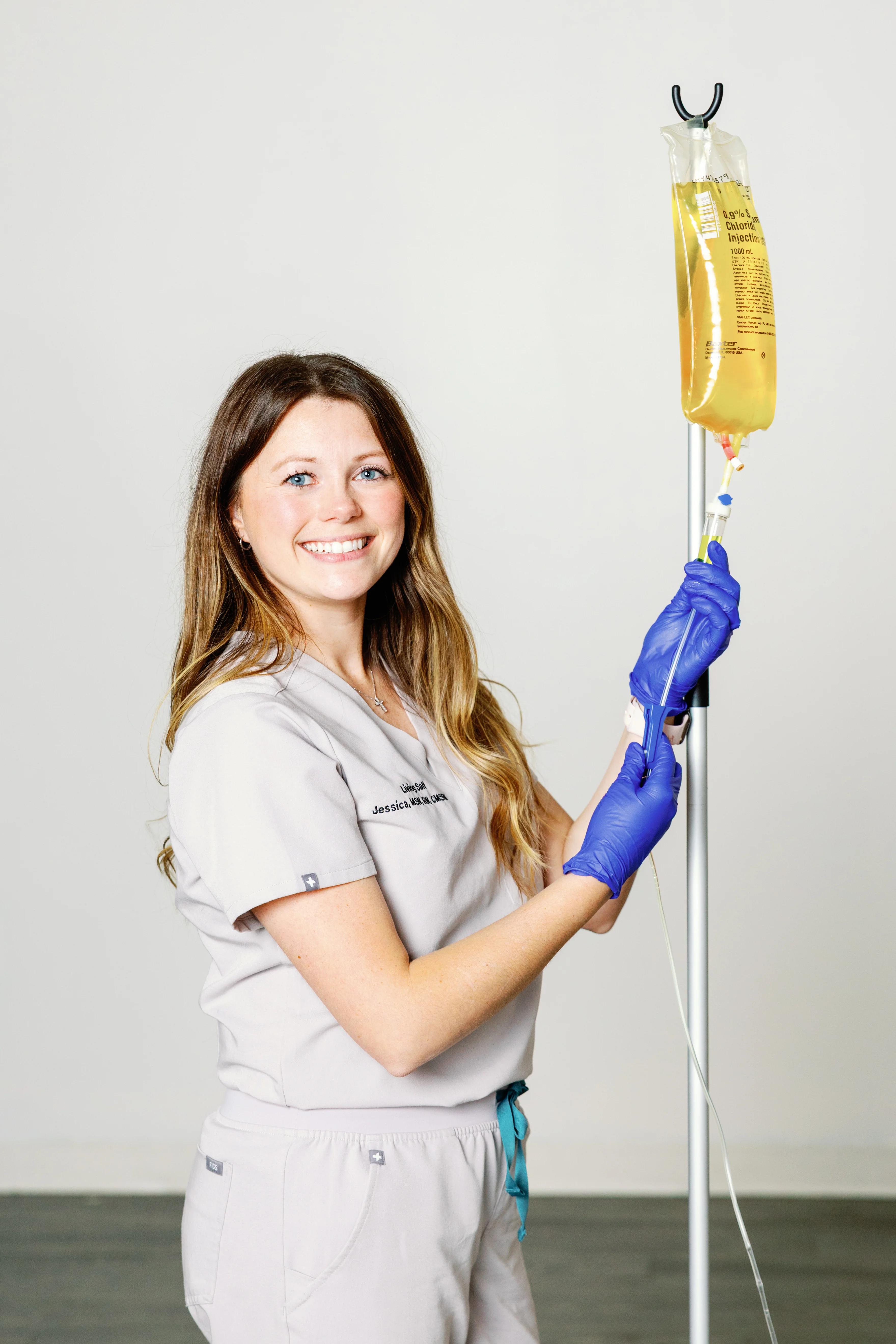
A Myers' cocktail is an intravenous blend of magnesium chloride, calcium gluconate, B-complex vitamins, hydroxocobalamin (vitamin B12), and high-dose vitamin C, delivered through a saline or lactated Ringer's base. The exact ratios vary slightly by provider, but the core formula has stayed remarkably consistent since it was first documented decades ago.
Key Takeaways
- The classical Myers' cocktail formula, per the Gaby protocol, uses 2 to 5 mL magnesium chloride (20%), 1 to 3 mL calcium gluconate (10%), 1 mL hydroxocobalamin, 1 mL B-complex, and 4 to 20 mL vitamin C, according to Alan R. Gaby, MD's 2002 Alternative Medicine Review documentation.
- A modern revised formulation, cited by some providers, adjusts to 5 mL vitamin C (500 mg/mL), 5 mL 30% magnesium chloride, 3 mL 10% calcium gluconate, 1 mL pyridoxine, 1 mL dexpanthenol, and 0.5 mL hydroxocobalamin.
- Vitamin C dosing in a typical Myers' cocktail ranges from 1 to 10 grams per infusion, according to industry pricing and formulation guides.
- Most sessions run 45 to 60 minutes and are administered by a licensed nurse, physician assistant, or physician under state nurse practice act rules, as of 2026.
- National average pricing for a Myers' cocktail session sits around $187, with mobile or in-home services typically running $199 to $325 depending on the provider and travel distance.
- People with kidney disease, those on dialysis, and individuals with G6PD deficiency need to be screened before receiving high-dose vitamin C or magnesium infusions.
If you've searched "what is in a Myers cocktail" hoping for a straight answer instead of vague marketing copy, you're not alone. Most clinic websites list ingredients without explaining what each one actually does in your body, or how the modern version differs from the original 1970s formula.
This guide breaks down the exact ingredients, doses, and physiological roles inside a standard IV bag, using the original Gaby protocol and the updated formulations pharmacies compound today. You'll also learn who should avoid this blend entirely, what a session costs in 2026, and how to tell whether a provider is actually qualified to hang the bag in the first place.
At Living Salt, we get asked constantly what's actually dripping into a client's arm during a hydration session in Pasadena, Maryland. The honest answer is: it depends on the provider, and that's exactly why understanding the ingredient list matters before you book anything.
What Ingredients Are in a Myers' Cocktail?
A Myers' cocktail contains five core components: magnesium chloride, calcium gluconate, B-complex vitamins, hydroxocobalamin (B12), and ascorbic acid (vitamin C), all suspended in a sterile saline or lactated Ringer's base. According to the MSD Manual, the Myers' formula "consists of high doses of B vitamins, vitamin C, magnesium, calcium, hydroxocobalamin, pyridoxine, and dexpanthenol mixed with sterile water."
Specifically, a per-mL breakdown from Kare Pharmacy shows a single-dose 10 mL vial contains 9.65 mg magnesium chloride, 4.03 mg calcium gluconate, 64.4 mg ascorbic acid, 1.62 mg vitamin B1, 3.23 mg vitamin B2, 1.62 mg vitamin B3, 4.07 mg vitamin B5, 1.63 mg vitamin B6, and 0.1 mg vitamin B12 per mL. That's a considerably more diluted, standardized version compared to the classic Gaby protocol, which uses concentrated draws measured in mL of each individual compound rather than a pre-mixed vial.
As a result, no two Myers' cocktails are identical unless they're compounded from the exact same source formula. A pharmacy-compounded bag and a clinic's proprietary blend can differ meaningfully in magnesium concentration, vitamin C dose, and total fluid volume, which is exactly why asking a provider for their specific formulation matters more than trusting the name on the menu.

What Is the Original Myers' Cocktail Formula?
The original Myers' cocktail formula, documented by Alan R. Gaby, MD in a 2002 Alternative Medicine Review article, uses 2 to 5 mL of 20% magnesium chloride, 1 to 3 mL of 10% calcium gluconate, 1 mL hydroxocobalamin (1,000 mcg), 1 mL B-complex, and 4 to 20 mL vitamin C. Dr. Gaby named the blend after Dr. John Myers, the Baltimore physician who developed it decades earlier, and Gaby's protocol remains the most-cited reference formula in clinical literature.
A separate formulation published in a 2010 PMC (National Institutes of Health) paper lists a nearly identical but slightly more precise version: 5 mL magnesium chloride hexahydrate (20%), 3 mL calcium gluconate (10%), 1 mL hydroxocobalamin (1,000 mcg/mL), 1 mL pyridoxine hydrochloride (100 mg/mL), 1 mL dexpanthenol (250 mg/mL), 1 mL B-complex 100, and 5 mL vitamin C (500 mg/mL), all mixed into 20 mL of sterile water before being added to a larger IV bag.
Notably, the addition of pyridoxine (B6) and dexpanthenol (a B5 precursor) in this version reflects a slight evolution from Dr. Myers' original 1970s recipe, which historical accounts suggest was simpler. Clinics compounding today's version are essentially working from this 2010-documented update rather than the bare-bones original.
How Does the Modern Myers' Cocktail Differ From the Classic Formula?
The modern Myers' cocktail formula typically uses slightly higher magnesium and standardizes vitamin C at a fixed 500 mg/mL concentration, compared to the wider dosing range in the classic Gaby protocol. A current published formulation used by other management companies calls for 1 mL B-complex, 5 mL vitamin C at 500 mg/mL, 5 mL 30% magnesium chloride, 3 mL 10% calcium gluconate, 1 mL pyridoxine hydrochloride, 1 mL dexpanthenol, and 0.5 mL hydroxocobalamin at 2,000 mcg/mL.
Compared to the 2010 PMC version, this revised formula bumps magnesium chloride concentration from 20% to 30% and reduces the hydroxocobalamin volume while doubling its concentration. In practice, that means less total fluid volume for the same nutrient payload, which some providers prefer because it shortens infusion time.
For most clients, the difference between formula versions is negligible in terms of how the session feels. What matters more is total elemental magnesium and total vitamin C, since those two ingredients drive most of the reported effects. If a provider can't tell you their magnesium and vitamin C amounts specifically, that's a sign to ask more questions before booking.
| Formula Version | Magnesium Chloride | Calcium Gluconate | Vitamin C | B12 (Hydroxocobalamin) |
|---|---|---|---|---|
| Classic Gaby Protocol (2002) | 2-5 mL, 20% | 1-3 mL, 10% | 4-20 mL | 1 mL, 1,000 mcg |
| PMC/NIH Documented Version (2010) | 5 mL, 20% | 3 mL, 10% | 5 mL, 500 mg/mL | 1 mL, 1,000 mcg/mL |
| Revised Pharmacy Formula (2026) | 5 mL, 30% | 3 mL, 10% | 5 mL, 500 mg/mL | 0.5 mL, 2,000 mcg/mL |
| Standardized Single-Dose Vial | 9.65 mg/mL | 4.03 mg/mL | 64.4 mg/mL | 0.1 mg/mL |
What Does Each Ingredient in a Myers' Cocktail Actually Do?
Each ingredient in a Myers' cocktail serves a distinct physiological role, ranging from muscle and nerve function support to antioxidant activity and energy metabolism. Understanding the individual components matters more than memorizing the formula, since it explains why certain populations respond better to this blend than others.
Magnesium Chloride
Magnesium supports muscle relaxation, nerve signaling, and cardiovascular function. It's the ingredient most associated with easing tension headaches and muscle cramps, and it's also the component most likely to cause a warm, flushing sensation if pushed too quickly through the IV line.
Calcium Gluconate
Calcium works alongside magnesium to regulate muscle contraction and nerve transmission. In the Myers' formula, it's included at a lower volume specifically to balance the higher magnesium dose, since unopposed magnesium can occasionally cause mild cramping.
B-Complex Vitamins (B1, B2, B3, B5, B6)
The B-complex portion supports cellular energy production, specifically the metabolic pathways that convert food into usable ATP. Thiamine (B1), riboflavin (B2), niacin (B3), pantothenic acid (B5), and pyridoxine (B6) each play a role in a different step of that energy cycle, which is why B-complex is frequently cited for combating fatigue.
Hydroxocobalamin (Vitamin B12)
Hydroxocobalamin, a stable form of B12, supports red blood cell formation and neurological function. It's included at a much smaller volume than the other ingredients because B12 is potent even in microgram doses, and it's the ingredient clients most often ask about by name.
Vitamin C (Ascorbic Acid)
Vitamin C acts as an antioxidant and supports immune cell function and collagen synthesis. According to ivlist.com, a typical Myers' cocktail infusion delivers 1 to 10 grams of vitamin C, a dose far higher than what's achievable orally since intestinal absorption caps out well below IV bioavailability.

How Long Does It Take for a Myers' Cocktail to Kick In?
Most clients report feeling effects within 15 to 30 minutes of infusion start, with the full session lasting 45 to 60 minutes total. Because the nutrients bypass the digestive system entirely, absorption happens directly at the cellular level, which is why effects tend to register faster than an oral supplement ever could.
Specifically, the magnesium component often produces the first noticeable sensation, a mild warmth or flush, since it's typically infused earlier in the bag alongside the saline base. Vitamin C and B-complex effects tend to build more gradually, with many clients reporting sustained energy or reduced fatigue over the following 24 to 48 hours rather than an immediate jolt.
As a result, timing your session matters. For hangover recovery or pre-event prep, scheduling a Myers' cocktail the morning of or the evening before tends to work better than same-hour expectations. For chronic fatigue or general wellness maintenance, effects compound over repeated sessions rather than delivering a single dramatic result.
Is a Myers' Cocktail IV Worth It?
A Myers' cocktail is worth considering for people dealing with dehydration, fatigue, hangover symptoms, or mild nutrient depletion who want faster relief than oral supplements provide, but it isn't a cure-all and shouldn't replace ongoing medical care for diagnosed conditions. The value depends heavily on why you're getting it and how consistently you use it.
For a one-off hangover or a rough week of poor sleep, a single session often delivers noticeable, if temporary, relief. For chronic fatigue, POTS, or dysautonomia symptoms, most nurses recommend a series of sessions rather than a single visit, since nutrient repletion builds cumulatively rather than resetting in one shot.
At Living Salt, our nurses in Pasadena and across Anne Arundel County typically walk clients through their specific symptoms before recommending a Myers' cocktail versus a more targeted hydration formula. Skipping that conversation and just picking the most popular menu item is the most common mistake we see new clients make. A basic hydration bag alone won't address deep nutrient deficiencies; pairing it with vitamin injections is often more effective for chronic fatigue specifically.
Who Should Not Get a Myers' Cocktail?
People with kidney disease, dialysis patients, and individuals with G6PD deficiency should avoid a standard Myers' cocktail without direct physician clearance, since the high magnesium and vitamin C load can pose real risks for these populations. This is one of the most under-discussed safety points in wellness IV marketing.
Specifically, kidney disease and dialysis patients often can't clear excess magnesium and calcium efficiently, which raises the risk of electrolyte imbalance from a standard-dose infusion. Additionally, people with G6PD deficiency, a genetic enzyme condition, can experience hemolysis (red blood cell breakdown) from high-dose vitamin C, making this a hard contraindication rather than a minor caution.
Pregnant and breastfeeding clients should also consult their OB or midwife before scheduling any IV vitamin therapy, even though many providers market Myers' cocktails as postpartum-friendly. And anyone on blood thinners or with a heart rhythm condition needs a nurse-led review of their medication list before the needle goes in, since magnesium can interact with certain cardiac medications.
A licensed provider should always screen for these factors before your first session, not after you've already booked. If a clinic skips this screening entirely, that's a red flag regardless of how polished their website looks.
How Much Does a Myers' Cocktail Usually Cost?
A Myers' cocktail session costs an average of $187 nationally as of 2026, according to IV Therapy Map's U.S. IV Therapy Market Report, with a 25th percentile price of $159 and a 75th percentile of $229 across more than 1,400 U.S. providers. Walk-in clinic sessions typically run $149 to $229, while mobile or in-home services average $199 to $325 due to added travel and setup time.
Specifically, concierge-style services in major metro markets can price a Myers' cocktail at $275 to $499, often bundling in additional add-ons like glutathione push or NAD+ boosters. Basic hydration drips without the full vitamin blend typically run cheaper, in the $99 to $175 range, which explains why some clients get confused comparing menu prices across providers offering different formulas under similar names.
Membership programs can reduce per-session costs by 20 to 40% compared to single-visit pricing, based on 2026 industry pricing data, which makes sense for clients planning recurring sessions rather than a one-time visit. If a provider won't share pricing before your appointment or requires you to book before quoting a number, that's worth questioning regardless of how the rest of the experience looks.
| Service Type | Typical Price Range (2026) |
|---|---|
| Basic hydration drip (no full vitamin blend) | $99 to $175 |
| Walk-in clinic Myers' cocktail | $149 to $229 |
| Mobile/in-home Myers' cocktail | $199 to $325 |
| Concierge/premium service with add-ons | $275 to $499 |
Who Administers a Myers' Cocktail and What Licensing Should You Verify?
IV therapy administration in the United States generally requires a licensed healthcare professional, typically a registered nurse, physician assistant, or physician, operating under state-specific nurse practice acts and physician oversight rules as of 2026. This is one of the most commonly skipped topics in wellness IV marketing, and it's the single most important thing to verify before booking.
Specifically, many states require physician-led protocols or standing orders even when a registered nurse is the one performing the infusion. FDA and state pharmacy boards also oversee the compounding of IV solutions, ensuring Myers' cocktail ingredients are prepared in sterile environments, often referencing USP 797 sterile compounding standards, though specific facility requirements vary by state and by whether a clinic compounds on-site or sources from an outside pharmacy.
Before booking with any provider, ask directly: Who is administering my infusion, and what is their license type? Is the formula compounded by a licensed pharmacy? What is the protocol if I have an adverse reaction on-site? A provider unwilling to answer these plainly isn't one you should trust with a needle in your arm.
Our nurses at Living Salt hold current Maryland licensure, and every client goes through a health screening before their first hydration session, whether that's a standard Myers' cocktail or a more targeted group package for an event. That screening step is non-negotiable for us, and it should be for any provider you consider.
How Does a Myers' Cocktail Compare to Modified or Branded IV Blends?
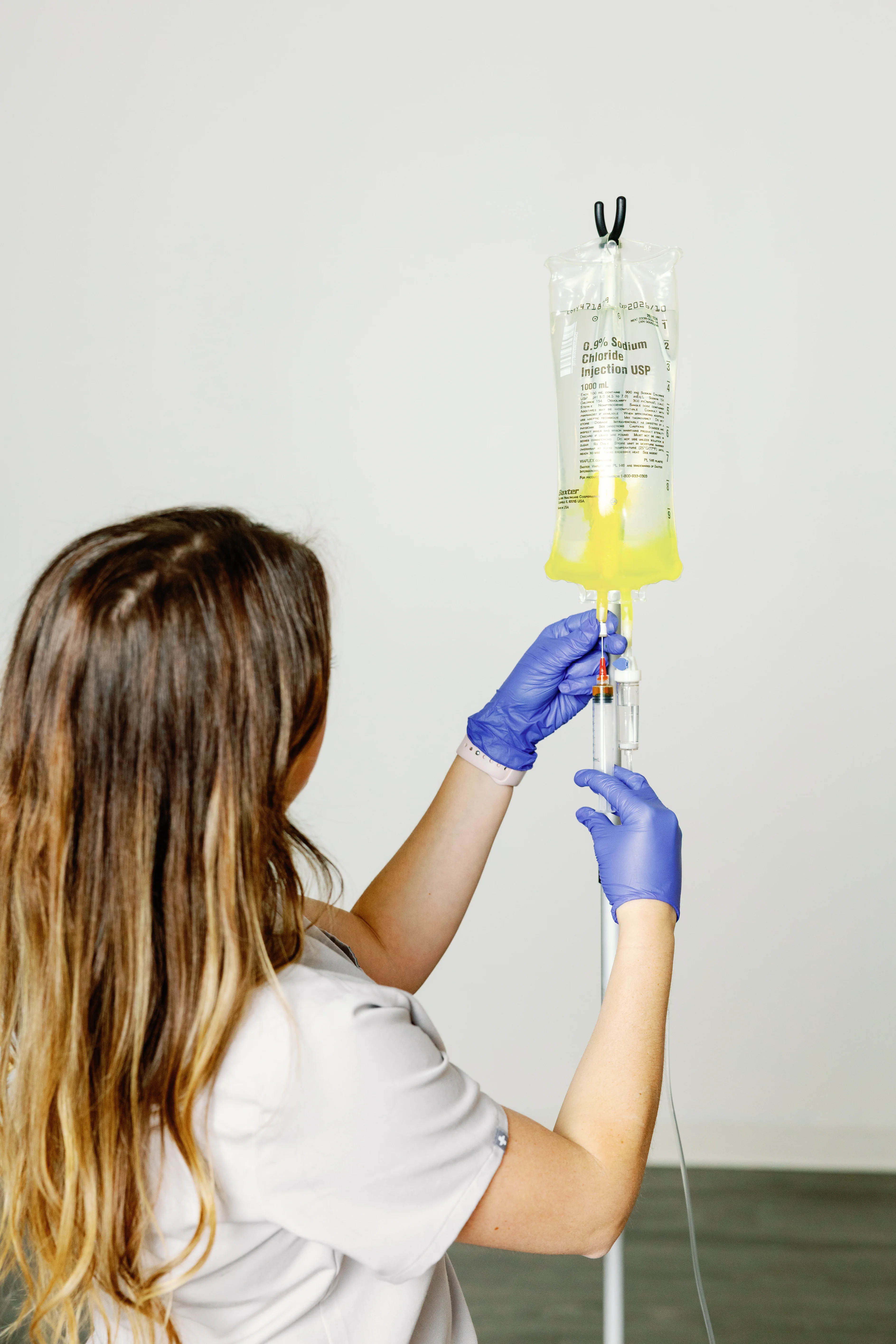
A Myers' cocktail refers specifically to the classic formula of magnesium, calcium, B-complex, B12, and vitamin C, while modified blends marketed under names like "immunity" or "recovery" bags typically add or substitute ingredients such as zinc, glutathione, or amino acids on top of that base. Understanding this distinction matters because pricing and effects shift significantly between versions.
For example, an immunity-focused variant might add zinc and extra vitamin C while reducing the magnesium dose, aiming at seasonal wellness rather than fatigue or hydration. A recovery or athletic-performance blend often adds amino acids or a higher saline volume to address post-exercise dehydration specifically, rather than nutrient repletion.
None of these modified versions are inherently better or worse than the classic Myers' cocktail. They're simply built for a different primary goal. If your main concern is hangover recovery or general fatigue, the classic formula covers the core bases. If you're targeting immune support or muscle recovery after a weekend sports league, ask your provider whether a modified blend or an added vitamin injection makes more sense than the standard bag alone.
Data Snapshot: The Myers' Cocktail Market in 2026
The global IV vitamin therapy market, which includes Myers' cocktail formulations, was valued at $1.58 billion in 2026 and is projected to reach $1.70 billion in 2026, expanding to $2.55 billion by 2034 according to industry market research. IV vitamin therapy overall accounts for roughly 38% of that market share as of 2026, with Myers' cocktail-based formulations driving the majority of those sales.
Separately, the broader U.S. intravenous hydration therapy market generated $1,121.9 million in revenue in 2026, according to Grand View Research, and is projected to reach $2,143.5 million by 2033. That growth reflects rising consumer interest in preventive, at-home wellness options rather than reactive clinic visits, a trend that shows up directly in demand for mobile IV services across markets like Pasadena, Severna Park, Glen Burnie, and Annapolis.
Home-infusion and mobile IV services specifically are expanding at about 7.5% annually in the U.S., reflecting a shift away from walk-in drip bars toward services that come to the client's home or office. For busy professionals in the greater Anne Arundel County area, that shift matters more than any single ingredient in the bag: it removes the drive, the waiting room, and the scheduling friction that keeps people from prioritizing recovery in the first place.
What Should You Ask Before Booking a Myers' Cocktail Session?
Before booking any Myers' cocktail appointment, you should ask about the exact formula and dosing, who will administer the infusion, and what health screening happens beforehand. These questions separate a professional, nurse-led provider from a drip bar operating on marketing alone.
- Ask for the specific magnesium, calcium, vitamin C, and B12 amounts in their standard formula, not just an ingredient list.
- Confirm the administering staff member's license type and whether a physician oversees the protocol.
- Ask how they screen for contraindications like kidney disease, G6PD deficiency, or current medications before your first session.
- Get pricing in writing before you book, including any travel fees for mobile service.
- Ask what happens if you have a reaction during the infusion and whether staff carry emergency protocols on-site.
- Confirm whether the IV solution is compounded by a licensed pharmacy or mixed in-house, and ask about their sterile compounding practices.
Skipping these questions is the most common mistake we see across new clients, whether they're weight loss seekers exploring medical weight loss options for the first time or weekend athletes chasing faster recovery. A transparent provider will answer all six without hesitation.
Frequently Asked Questions
What is in a Myers cocktail exactly?
A Myers cocktail contains magnesium chloride, calcium gluconate, B-complex vitamins (B1, B2, B3, B5, B6), hydroxocobalamin (B12), and high-dose vitamin C, mixed into a saline or lactated Ringer's base. Exact ratios vary by provider and formula version, ranging from the classic Gaby protocol to modern pharmacy-compounded blends.
How long does it take for a Myers cocktail to kick in?
Most people notice effects within 15 to 30 minutes of infusion start, with the full session running 45 to 60 minutes. Because nutrients enter the bloodstream directly, effects register faster than oral supplements, though full benefits like sustained energy often build over the following 24 to 48 hours.
Is a Myers cocktail IV worth it?
A Myers cocktail is worth considering for hangover recovery, mild dehydration, or fatigue, but it works best as part of a broader wellness routine rather than a one-time fix. Chronic conditions like POTS or dysautonomia typically respond better to a series of sessions than a single visit.
Who should not get a Myers cocktail?
People with kidney disease, dialysis patients, and those with G6PD deficiency should avoid a standard Myers cocktail without physician clearance, since high magnesium and vitamin C doses can pose real risks for these groups. Pregnant or breastfeeding clients and anyone on blood thinners should also consult a medical provider first.
How much does a Myers cocktail usually cost?
A Myers cocktail session averages $187 nationally in 2026, with walk-in clinics typically charging $149 to $229 and mobile in-home services running $199 to $325. Concierge providers with add-ons like glutathione or NAD+ can charge $275 to $499 per session.
Can I get a Myers cocktail if I'm on medication?
It depends on the medication. Blood thinners and certain heart rhythm medications can interact with the magnesium in a Myers cocktail, so a licensed nurse should review your full medication list before your first session. Never skip the screening step, even if you've had IV therapy before elsewhere.
How is a Myers cocktail different from a basic hydration IV?
A basic hydration IV typically contains only saline and electrolytes, while a Myers cocktail adds the full vitamin and mineral blend, magnesium, calcium, B-complex, B12, and vitamin C, on top of the fluid base. Basic hydration drips are priced lower, usually $99 to $175, reflecting the simpler formula.
Do I need a membership to book IV therapy, or can I do one-off sessions?
Most providers, including mobile services, offer both single sessions and membership packages. Memberships typically reduce per-session costs by 20 to 40% for clients planning regular visits, but a one-off session works fine for occasional needs like hangover recovery or a single event.
Conclusion: Know What's in the Bag Before You Book
A Myers' cocktail is a specific, well-documented formula of magnesium chloride, calcium gluconate, B-complex vitamins, hydroxocobalamin, and vitamin C in a saline base, not a vague wellness buzzword. Whether you're chasing hangover relief, managing chronic fatigue, or just trying to feel human again after a long week in Pasadena, knowing the exact dosing and who's administering it matters more than any menu name.
As the IV vitamin therapy market keeps expanding through 2026 and beyond, the providers who stay transparent about formulation, pricing, and licensing will be the ones worth trusting. Ask the questions, check the credentials, and treat the ingredient list the way you'd treat any other medical decision: with a healthy dose of curiosity.
If you're ready to feel like yourself again, Living Salt brings nurse-led hydration therapy directly to your door across Pasadena, MD and the surrounding Anne Arundel County communities. Get started with Living Salt to schedule a consultation and find out exactly what formula fits your needs.